The alpacas of Quinta do Rio
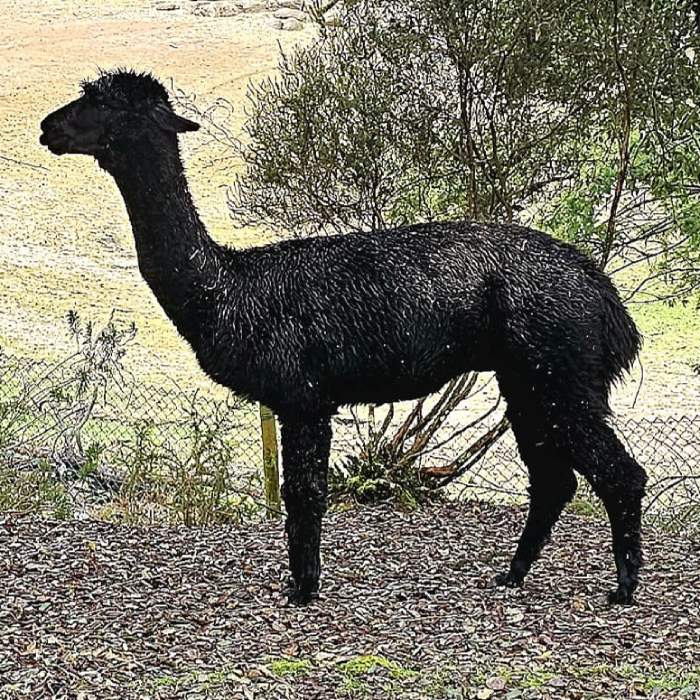
First of all, I would like to introduce you to the seven alpacas. After all, they are the ones who provide the wool:
Click the photos for a larger version.
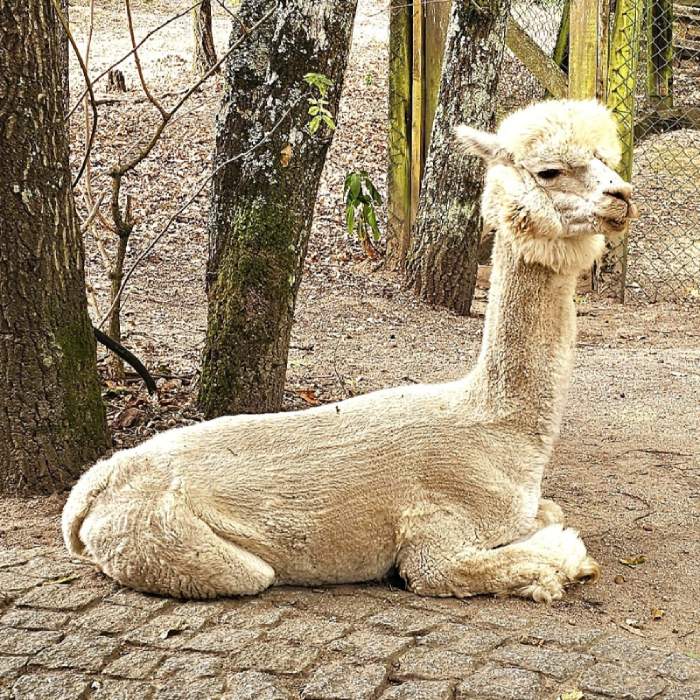
Ello
Kody
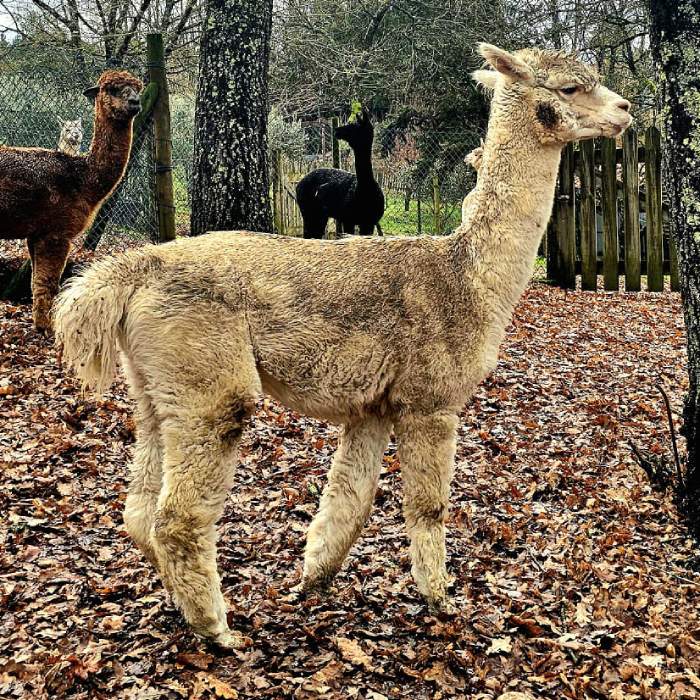
Tiësto
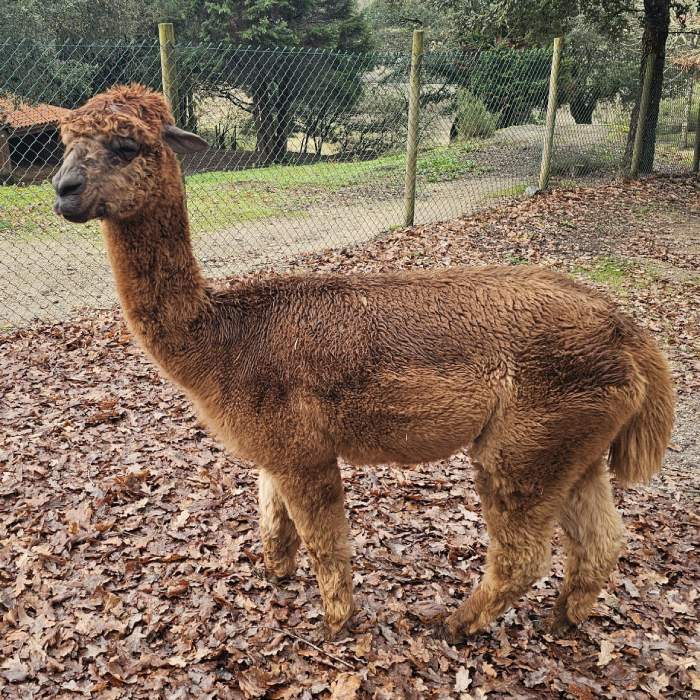
Manolito
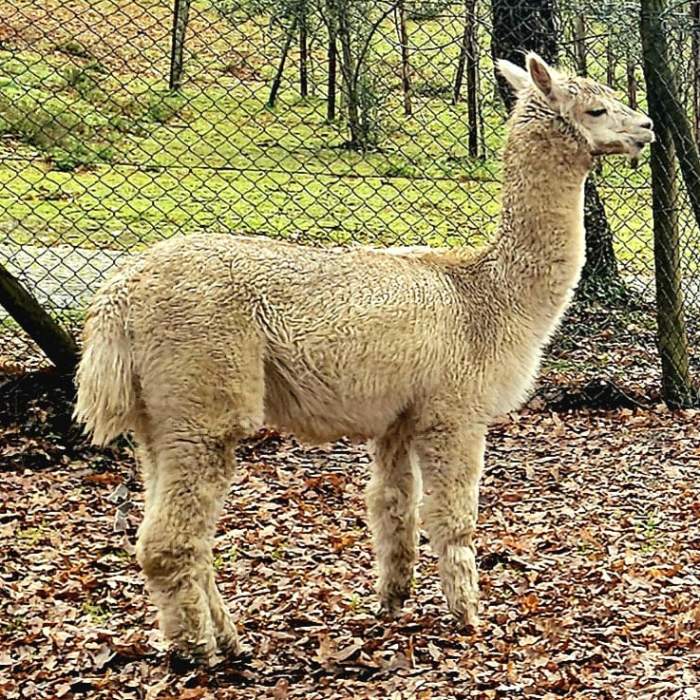
Marco
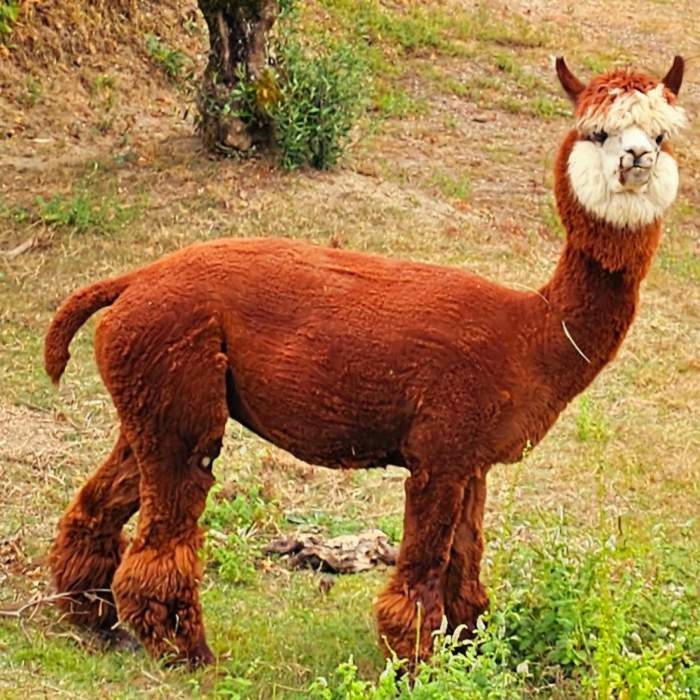
Olaf
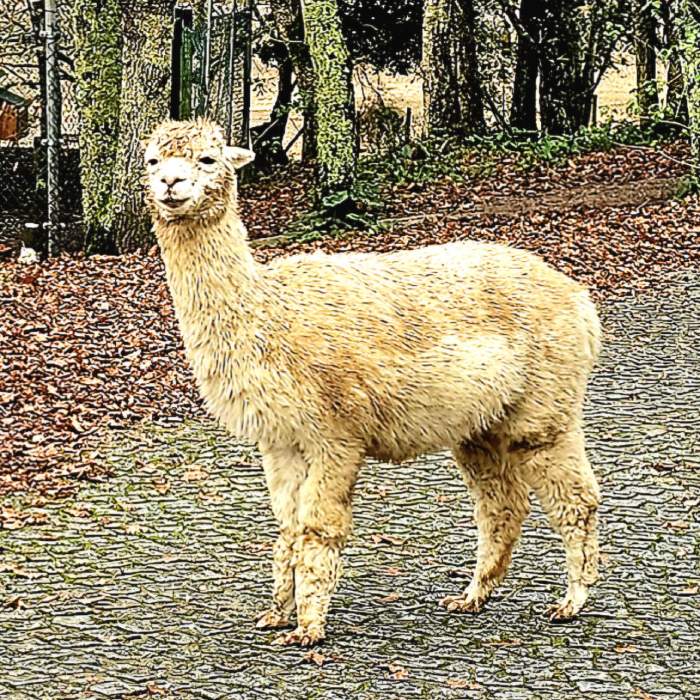
Emilio
Shearing of the alpacas
The seven alpacas at Quinta do Rio are well cared for and have a fantastic life there. They are sheared in the spring. I am present during this process and collect the wool. I then sort and wash the wool.
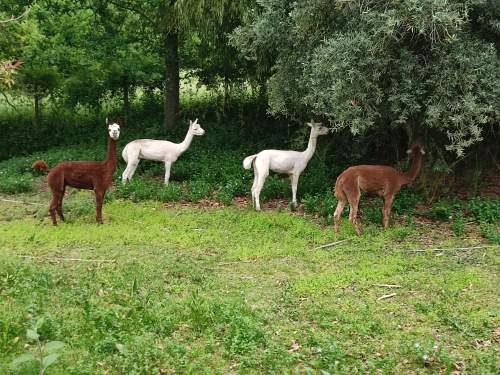
sheared alpacas
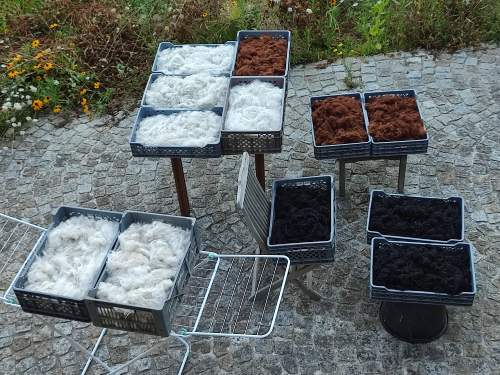
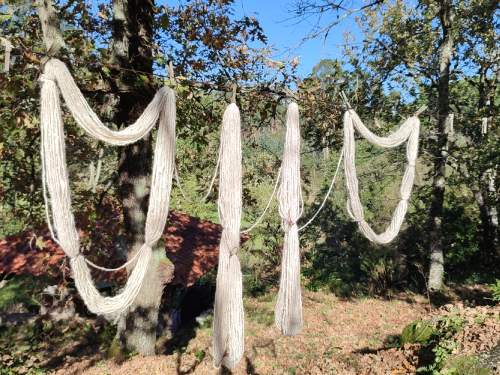
washed wool
The Portuguese sheep
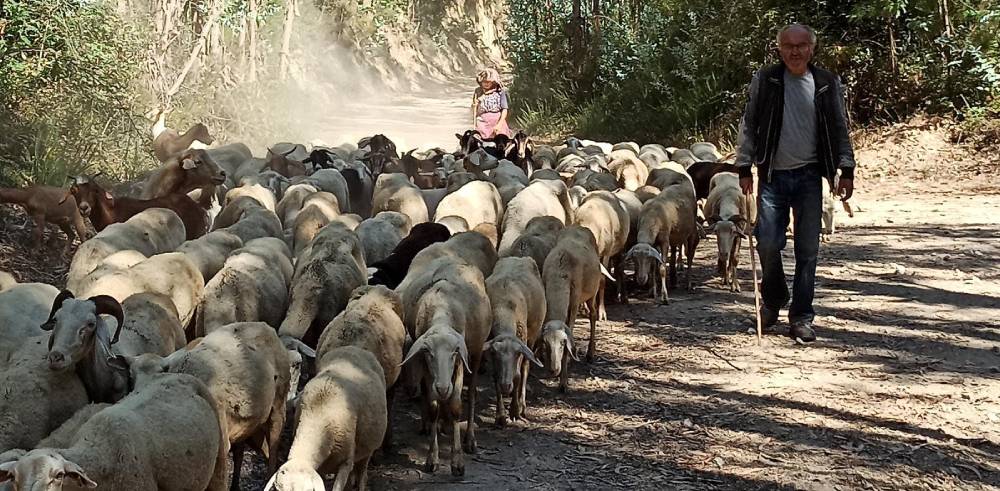
There are 16 different breeds of sheep in Portugal, see this pdf file, starting on page 66, of which six are threatened with extinction.
Each breed, and therefore its wool, has its own specific characteristics. I have used a small percentage of Marinha Preta and Campaniça wool in some of my jumpers.
Soon I hope to keep some sheep of a Portuguese breed.
Carding the wool
The shorn and washed wool is not yet suitable for further processing. By carding the wool, the hairs are aligned in the same direction and any remaining dirt can be easily removed. It also removes tangles. This makes the wool airy and ready for further processing.
Carding can be done with the wool from a single alpaca or sheep, but you can also add wool of a different color, for example, to create a beautiful effect in the final wool.
I use a carding mill. A large and a smaller roller with upright spines rotate like gears, and the raw wool that comes between them is carded in this way, ready to be spun.
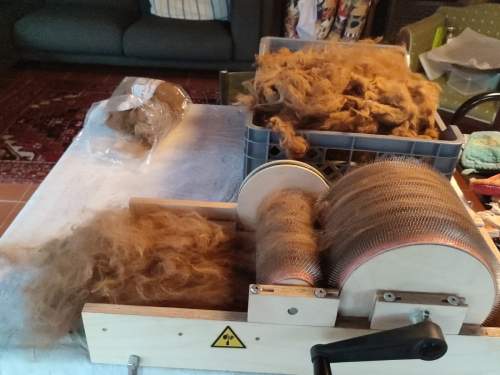
carding
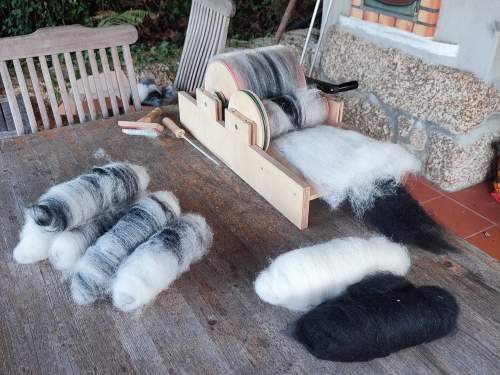
mixed carding, 2 colours
Spinning and twisting
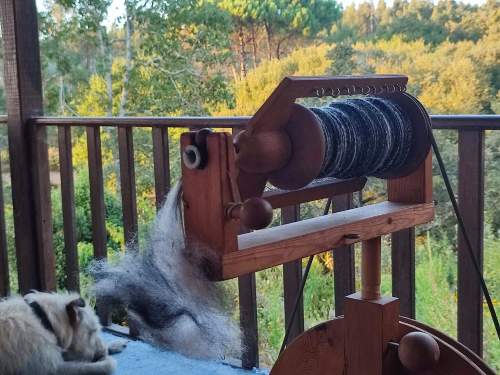
Spinning is the process of twisting the loose fibres of carded wool together to form a thread that does not fall apart. This thread is wound onto a bobbin on my spinning wheel.
Twisting: Next, I can twist two of those bobbins together on the same spinning wheel, creating a stronger thread. Twisting in the opposite direction to the spinning releases the tension in the thread. This prevents the knitting from pulling out of place. Twisting two different colored yarns can create a nice effect.